Point of Care Lung Ultrasound in Pediatrics and Neonates
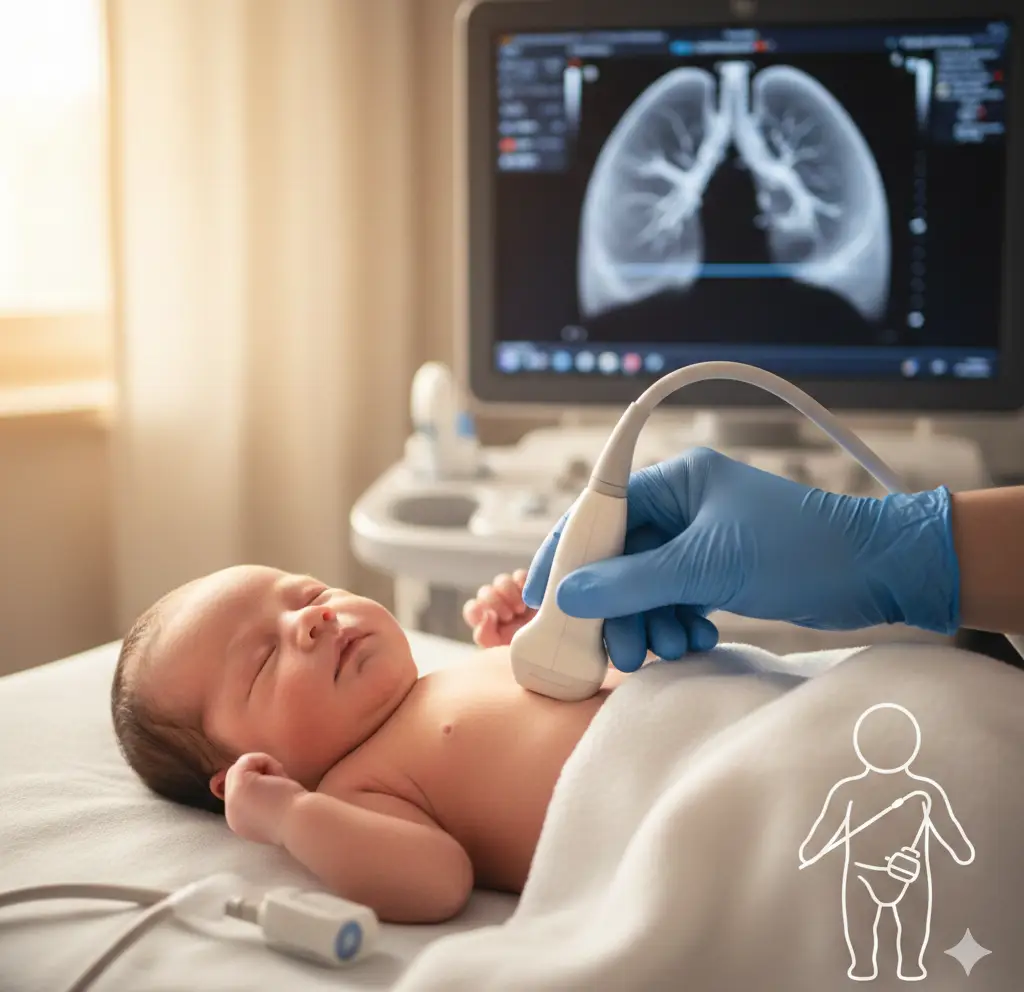
The Point of Care Lung Ultrasound in Pediatrics and Neonates course is designed to help healthcare professionals use lung ultrasound as a rapid bedside diagnostic tool for assessing respiratory conditions in both pediatric and neonatal patients.
This course focuses on the principles of lung ultrasound and its clinical applications in evaluating respiratory distress and lung pathology in children and newborns. Through short micro-learning sessions, learners will understand how to perform lung ultrasound examinations, recognize normal and abnormal findings, and apply them to real clinical scenarios.
Topics include probe selection, scanning techniques, lung ultrasound artifacts, and key findings such as A-lines, B-lines, pleural abnormalities, consolidations, pneumothorax, and common neonatal lung conditions. The course emphasizes integrating ultrasound findings into practical clinical decision-making in emergency departments, neonatal units, pediatric wards, and intensive care settings.
Each module includes short video demonstrations, structured explanations, and practice questions to reinforce learning and improve confidence in using lung ultrasound in pediatric and neonatal practice.
This course is ideal for pediatric trainees, neonatology trainees, emergency physicians, intensivists, and healthcare professionals involved in the care of pediatric and neonatal respiratory illness.
Want to submit a review? Login and enrolled
This course includes
Fundamentals of lung ultrasound in pediatric and neonatal patients
Interpretation of key lung ultrasound findings
New applications of lung ultrasound in pediatric critical care
Practice questions to reinforce learning